
FEATURED PROJECT • 2024 – 2026
RCE Minna is a partner in the Minna Cemetery Regeneration Project, delivered by the Niger State Government through the Ministry for Local Government and Chieftaincy Affairs and the Ministry of Lands and Survey, with the Ministry of Housing and Urban Development and the host communities. The project grew out of Minna Urban Regeneration Through Acupuncture (MURTA), a people-centred approach that uses small, targeted interventions to trigger wider improvement without displacing residents or disrupting culture.
While MURTA was being implemented in Kpakungu Ward, community engagement and GIS analysis showed that the city’s cemeteries were among its most neglected yet most culturally important spaces: hard to reach, eroded, encroached upon and unsafe. Under a new strand, Planning of Vulnerable Spaces (PVS), three cemeteries covering about 26.44 hectares were regenerated:
- Kpakungu Cemetery Extension (9.14 ha), Niger State’s first planned cemetery, expanded from 5.98 ha with capacity for about 3,976 graves;
- Anguwan Daji Muslim Cemetery (14.2 ha), with walkways, trees and solar lighting; and
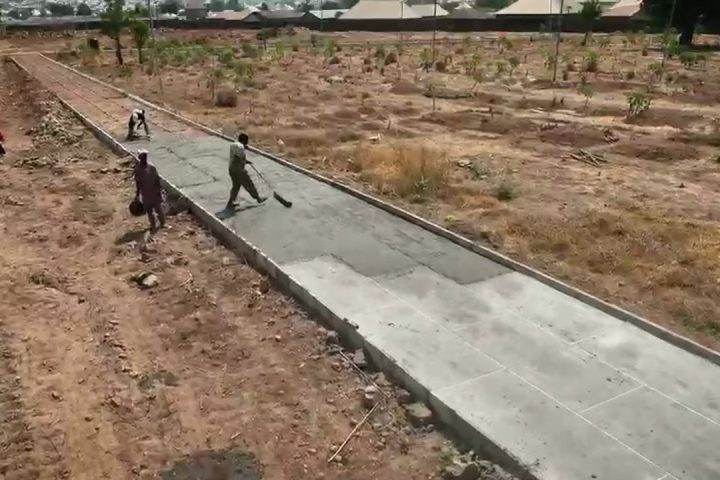
- David Mark Road Christian Cemetery (3.1 ha), with accessible routes, lighting and water points. Its named graves, dating back to the 1920s, also make it an important part of Minna’s history.
What was delivered
| Intervention | Detail |
|---|---|
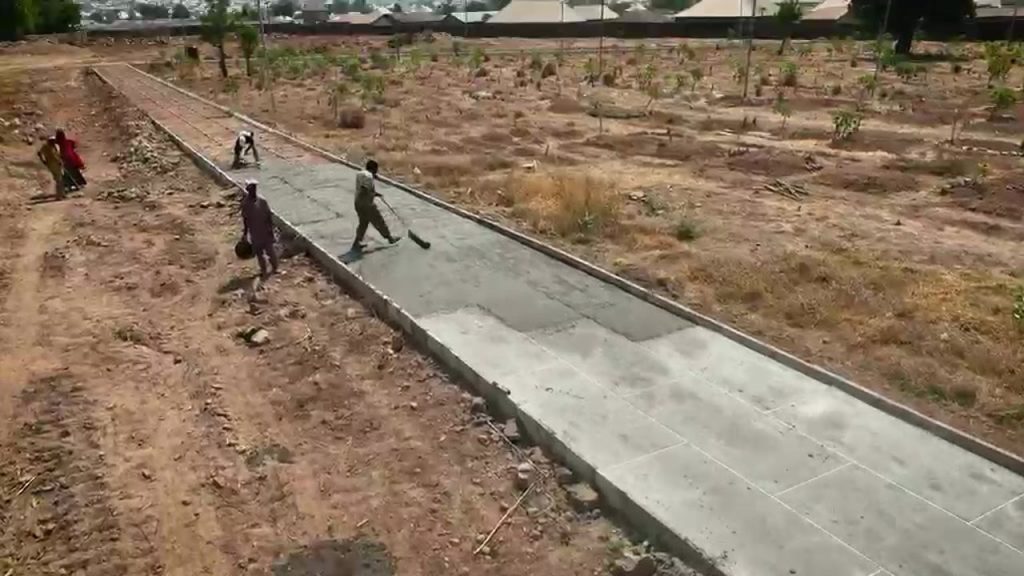
| Access routes | 3-metre ambulance and service routes and 1.5-metre walkways – more than 1.8 km in total |
| Lighting | 106 solar street lights |
| Water | Solar-powered boreholes |
| Facilities | Offices and stores for cemetery workers; corpse-washing facilities designed to respect religious practice |
| Comfort & safety | Shaded seating for the elderly; drainage and erosion control |
| Greening | Tree planting and landscaping |
Impact
Within nine months, more families were visiting their loved ones’ graves, elderly people and persons with disabilities could move about safely, and cemetery management had become more orderly. The public has since asked for the model to be extended to other cemeteries and vulnerable spaces.
The project was recognised by UN-Habitat and Shanghai University as a Shortlisted Practice in the International Outstanding Practices on Urban Regeneration (IOPUR) 2025.
See RCE Minna at WUF13, Baku